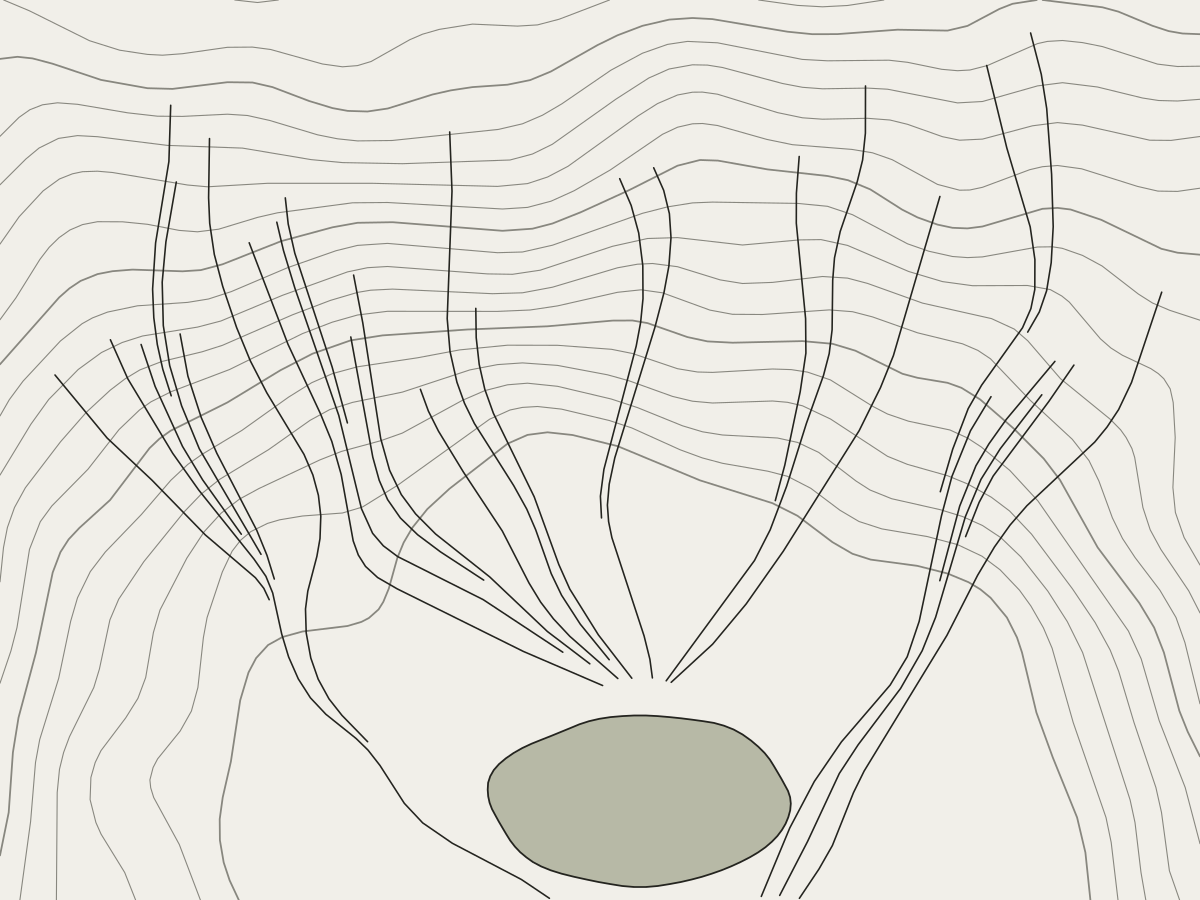
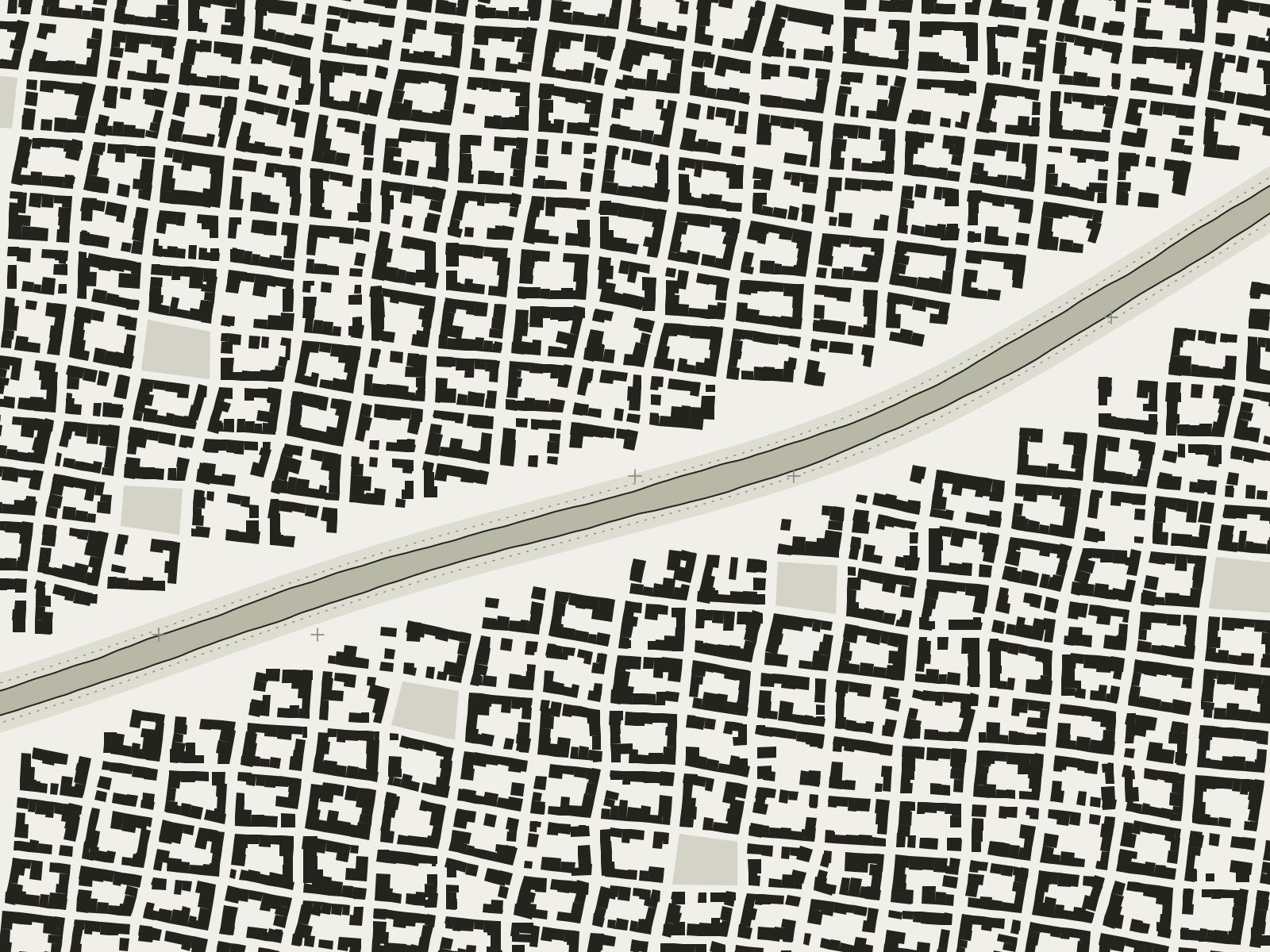
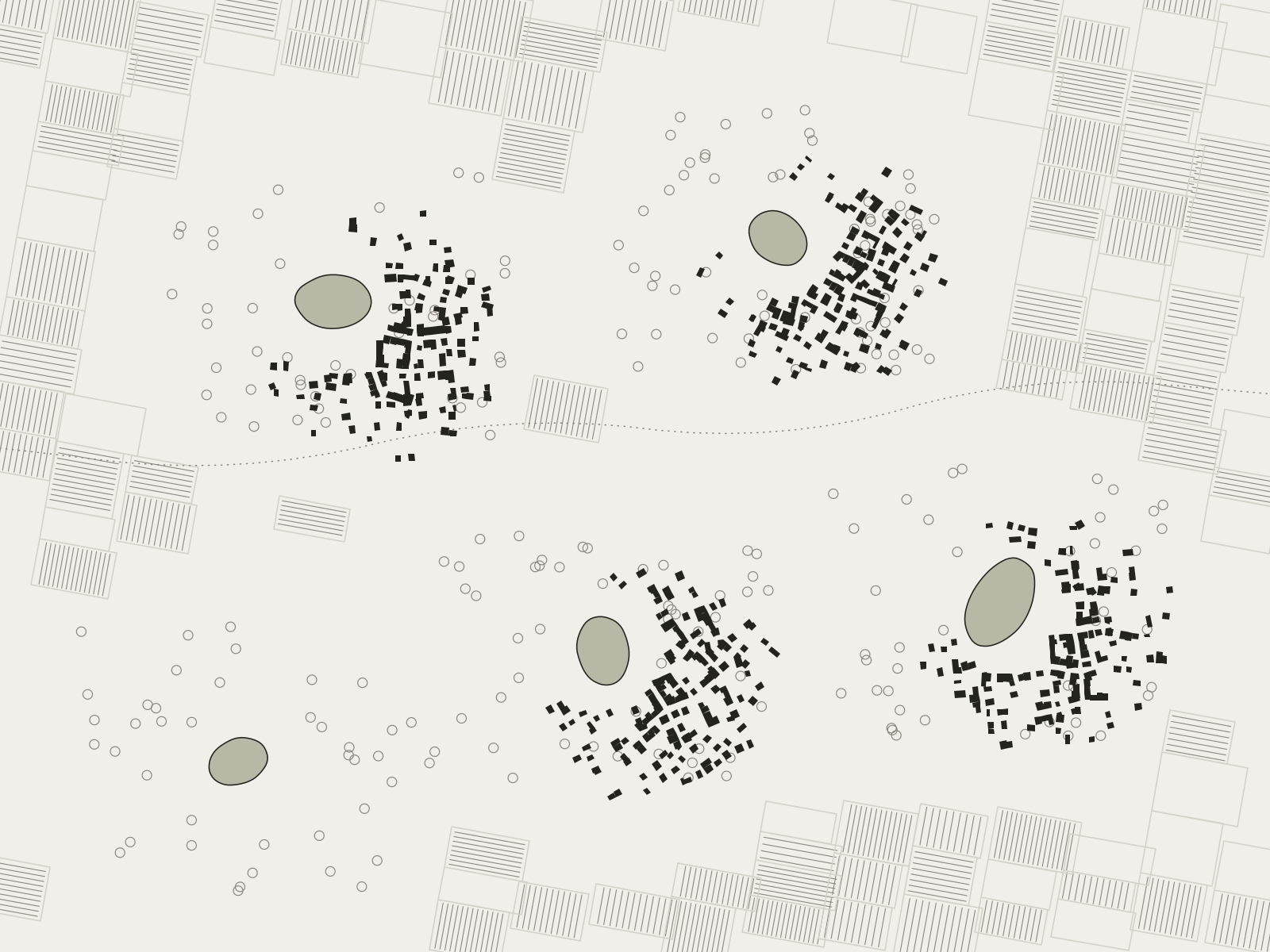
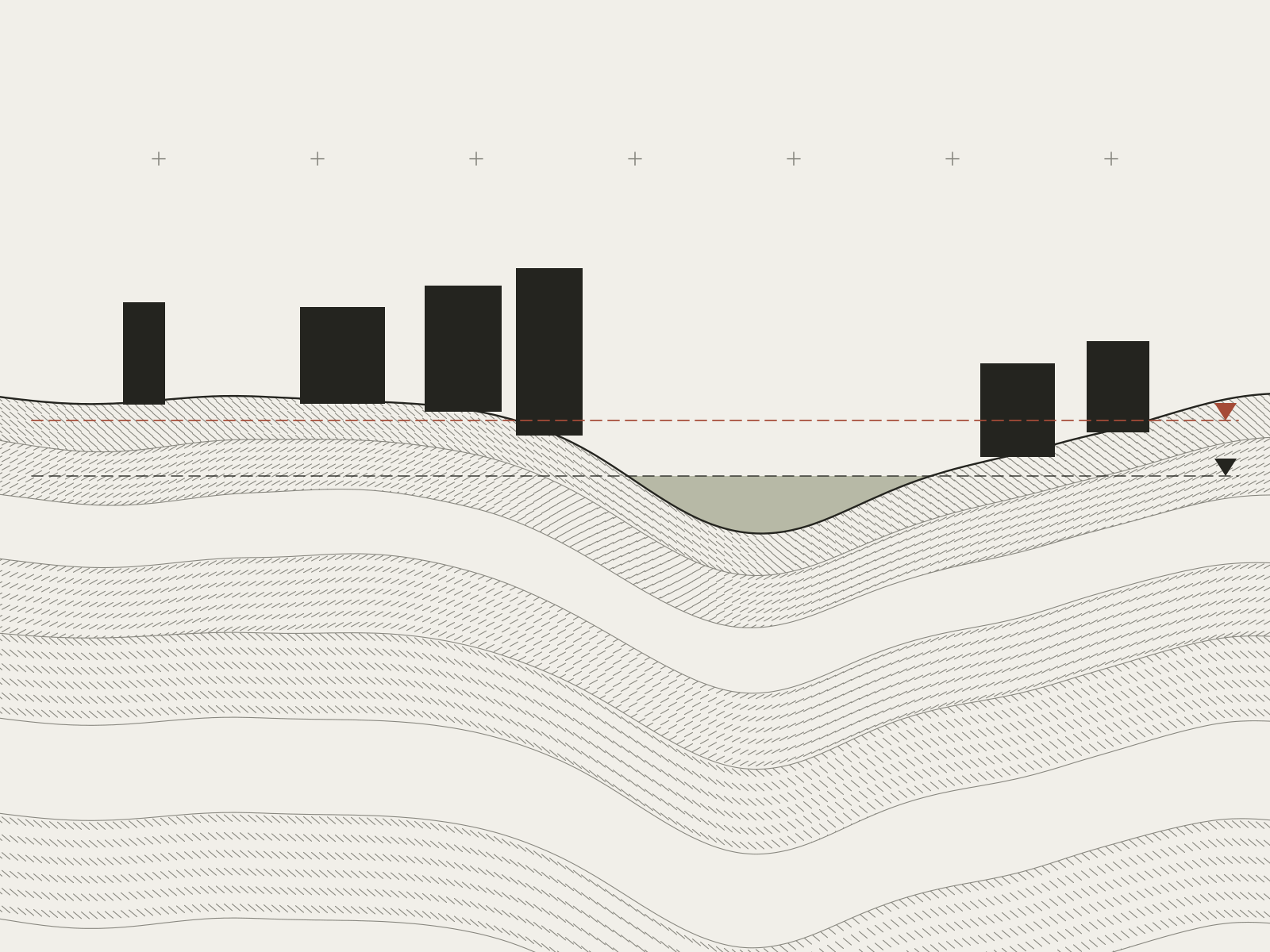
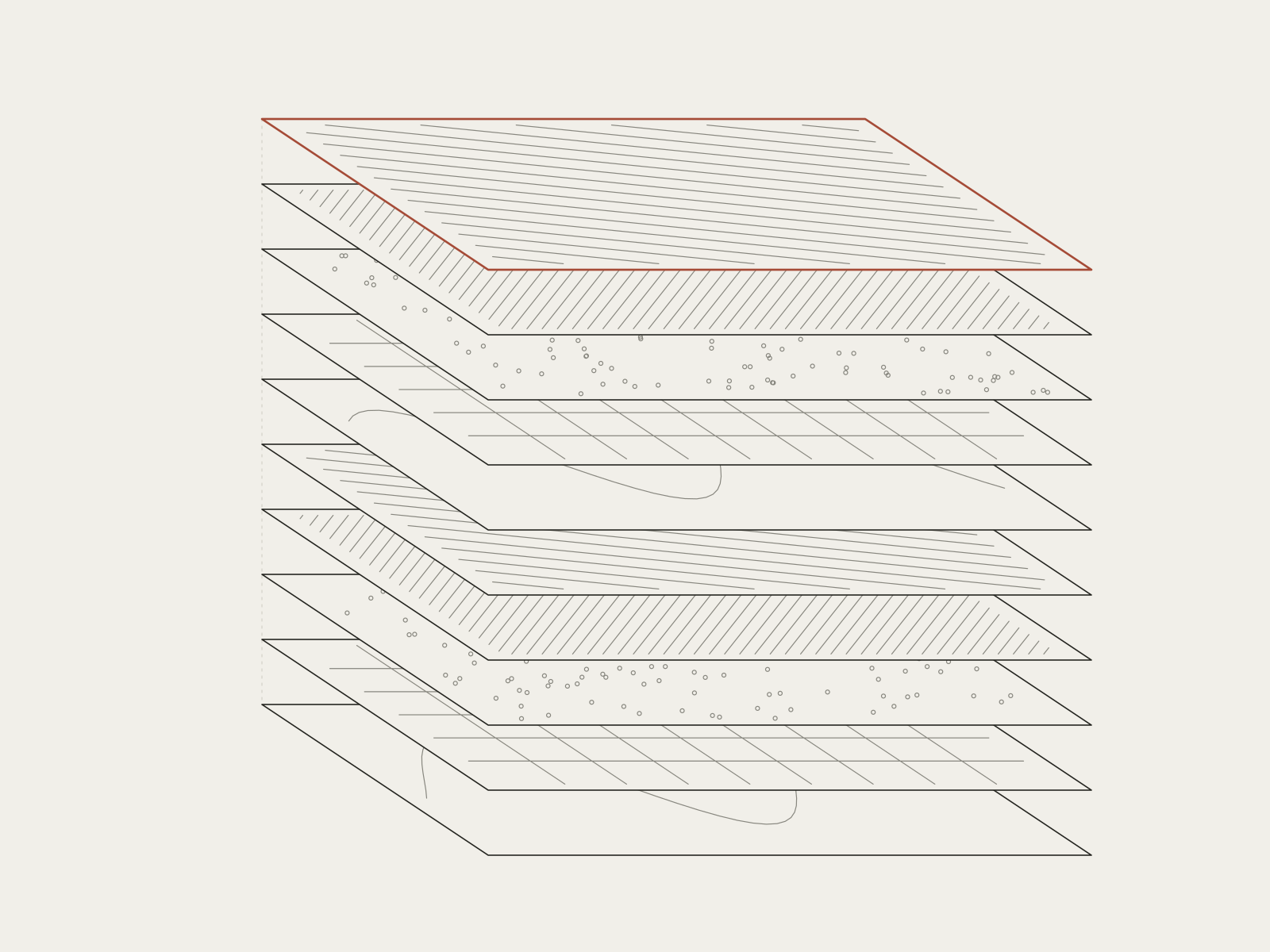
The ecological layer concerns the living systems a place depends on: climate, topography, biodiversity and resources (Reza 2025). In the deltaic setting from which New Contextualism emerged, it begins with water: monsoon rain, rivers and canals, and the settlement patterns they have shaped.
New Contextualist writing criticises architecture that ‘treats the environment as a backdrop rather than a lifeblood’, citing paved-over wetlands, urban heat islands and the loss of Dhaka’s river and canals to encroachment (Reza and Nitu 2025). Its later formulation, New Contextualism 2.0, adds nature-inspired design, a deeper integration of sustainability and an emphasis on proactive resilience to sea-level rise and storms (Reza 2025).