Heritage has been part of New Contextualism from its origins in the founder’s research on the early architecture of Bengal. In the New Contextualist perspective, heritage ‘is a vital, living continuum—a repository of knowledge, identity, and meaning that must actively inform contemporary design’ (Reza 2025).
New Contextual Heritage Management (NCHM)
The name appears in the title of a 2026 article by Reza and Rahman on the Buddhist monastery of Somapura Mahavihara, ‘A New Contextual Heritage Management of a Buddhist Sacred Land’ (Reza and Rahman 2026). Its abstract proposes ‘a New Contextualist framework to restore its spiritual aura and amplify its global appeal’, drawing on lessons from Buddhist pilgrimage centres including Bodh Gaya, Lumbini and Bagan (Reza and Rahman 2026).
The year before, the founder was listed to present New Contextualism at the State Heritage Conference 2025 in Western Australia. The abstract of that presentation argues that it ‘offers a valuable framework for creating sustainable, equitable, and culturally sensitive heritage sites’, and proposes to ‘discuss how these principles can be applied to heritage sites, using case studies to illustrate the potential of this approach’ (Heritage Council of Western Australia 2025).
A general definition awaitedNeither text sets out a general definition of New Contextual Heritage Management. One will be added here when the founder publishes or approves it.
Cultural Continuity and Change
The texts reject both the preservation of heritage apart from life and its replication. Heritage is ‘not a static relic to be cordoned off or merely replicated’; understanding its layers, narratives and embedded wisdom ‘allows us to create interventions that are respectful yet innovative, fostering a sense of continuity rather than rupture’ (Reza 2025). The aim is ‘building upon legacy, not just beside it’ (Reza 2025).
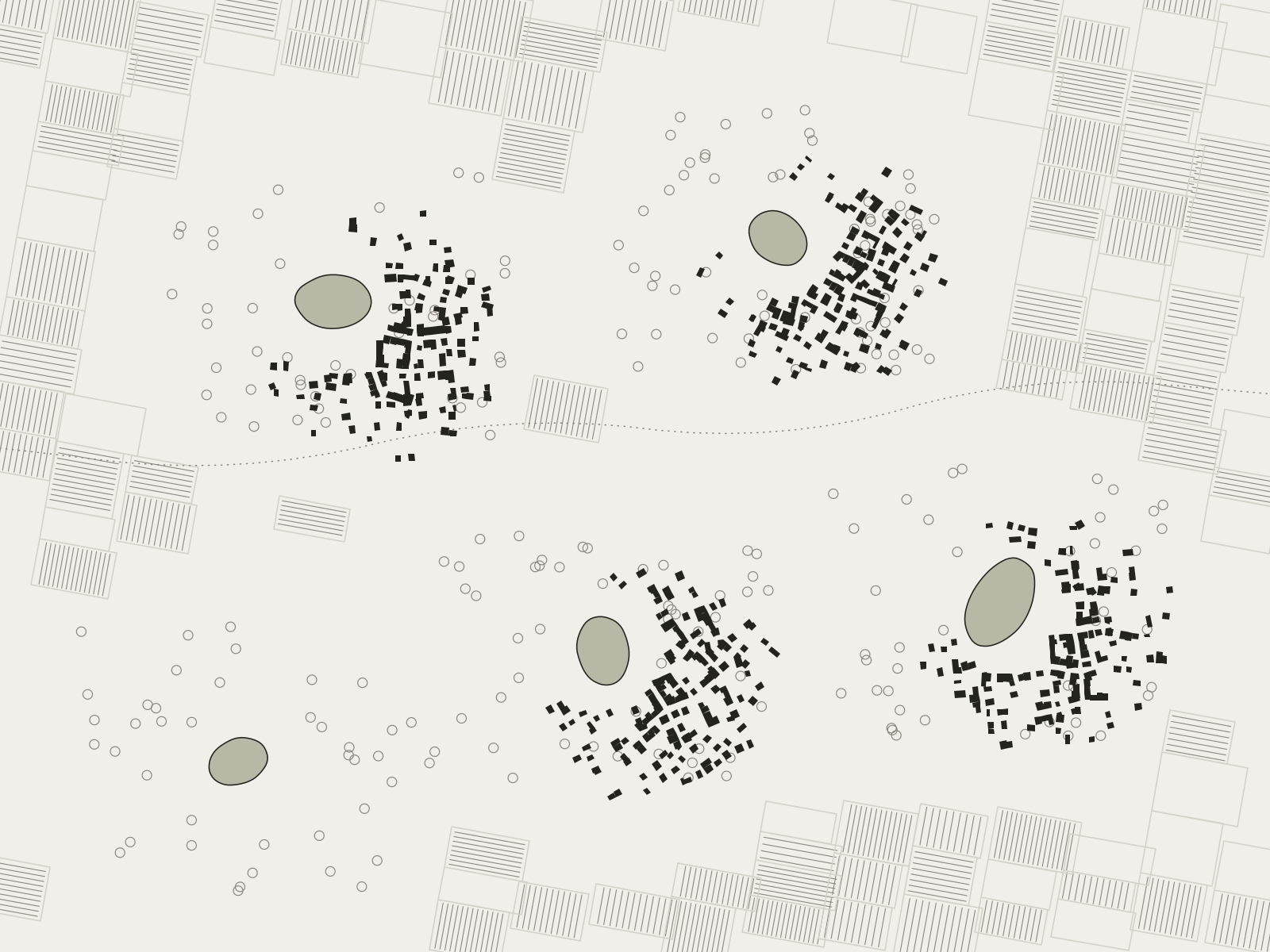
The founder’s historical research supplies examples of continuity through change. A 2021 article reads the pond beside almost every Sultanate mosque of Bengal as a sign of the continuity of Bengali tradition, within a culture ‘evolved through a long process of hybridization’ (Reza 2021).
Tangible and Intangible Heritage
The 2026 article argues for ‘an integrated management strategy that harmonizes conservation of tangible and intangible heritage, community participation, and sustainable tourism innovation’, with ‘interpretive interventions, revived rituals, and inclusive stakeholder engagement’ (Reza and Rahman 2026).
The documented proposals treat intangible heritage as a design generator. The Panatirtha thesis, at a pilgrimage site traditionally visited once a year, drew on ‘spiritual & cultural concepts, especially Advaita, or Non-dualism’ to shape its spatial form (Reza and Nitu 2025). The Alpana Gram proposal concerns a rural settlement ‘celebrated for its vibrant Alpana art’ (Reza 2025).
Heritage Values and Stakeholders
Communities are presented as participants in managing heritage, and as its beneficiaries. The Alpana Gram proposal aimed to make the village ‘a community-based tourism destination to manage tourism's impact on the existing settlement fabric and benefit the community’ (Reza 2025). The founder’s earlier work includes a community-involved strategic management plan for Chhoto Katra in Old Dhaka (Reza 2018a). A 2024 thesis that took its inspiration from New Contextualism challenged a planned five-star hotel that, in its account, ‘would have uprooted the local Murong tribe’ (Arch-Bangla 2024d).
Contextual Heritage Assessment
Awaiting documentationNo published source yet describes a New Contextualist method for assessing heritage sites.
The founder’s earlier practice includes documentation and heritage management plans for traditional oasis settlements in Oman, prepared at Nottingham Trent University (Bandyopadhyay et al. 2014; BRAC University n.d.a). How the ten layers might structure such an assessment has not yet been set out; the editorial ten-layer reading sheet may serve as a starting point for discussion.